


This type of surgery is performed by experienced European Professors-surgeons, who have over 25 years of surgical experience, which is the best guarantee to patients for the successful surgical outcome.
Special hospital SVETI VID is one of a kind institution in these regions with specially formed department for macula, with complete diagnostics and treatment for yellow spot diseases and macular surgery.
For better understanding of functions of particular parts of human eye, it is often compared with camera. The light passes through transparent structures of the eye (cornea, lens, vitreous body, what is analogy with optical part of camera) it is refracted and focused in the back part of the eye-retina. Retina is acting as film in the camera, absorbing and changing light into neuro impulses travelling to brain, where they are analyzed and the consciousness about viewed object is generated, actually we receive picture of viewed object.
Special part of retina responsible for central vision and detail differentiation is MACULA or yellow spot. It is abundant with photoreceptors – cells which receive visual stimulus and transmit it by neural elements. Dens organization of cones in macula enable the sharpnes of vision, detail information and face differentiation, reading, writing, color distinction…
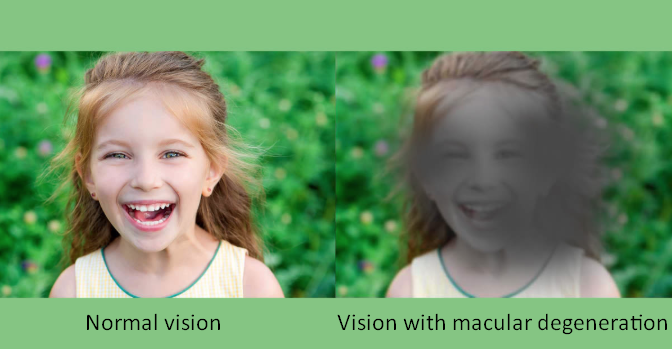
Damages to macula lead with time to loss of central vision- “central blindness”. Because peripheral sight is preserved, this is not complete blindness, so the patient would be, through the program of rehabilitation, taught to use peripheral vision, with aids- low vision systems.
Degeneration of yellow spot is one of burning problems in modern ophthalmology. It is closely tied with population called by old terminology age related macular degeneration (ARMD), but it is more often to occur even in younger population. It has two forms : dry AMD and wet AMD form.
Macular changes are seen also in high myopia (myopic maculopathy), as well as in congenital degenerative progressive diseases (juvenile macular degeneration). Macula suffers in som systemic diseases (diabetes) or inflammatory and infectious diseases.
Risk factors for AMD
Risk of occurring of senile macular degeneration significantly rises with age of life. In population of 65 – 75 years of life the risk is about 10 – 20 percent. From the ages 75-85 years risk is already 35 percent.
Genetic predisposition is no doubt important risk factor. Children of ARMD parents have increased risk of incurring it.
Danger is excessive exposing to particularly blue part of spectrum, and especially in people sensitive to light and of pale complexion. Recommendation is to wear glasses with protective filter- particularly at ocean or snow.
Other risk factors are identical to risk factors for atherosclerosis development: smoking, increased level of lipids in blood, deficiency of certain vitamins in diet – C, E, A.
High blood pressure and cardiovascular problems can speed up development of changes.
Smokers with close relatives having macular degeneration are under two times greater risk of developing the disease.
Symptoms
As a result of macular damage central vid has defect, without possibility of improving it with glasses, but with conserving peripheral vision, so it is not about complete blindness. Patient needs to see ophthalmologist if noticing symptoms like decreased contrast sensitivity, prolonged adaptation to dark, decrease of visual acuity, appearance of stains in central vision( central scotoma), or distorting images…
Although it attacks both eyes, this disease usually is not equally present in both eyes, so “better” eye compensates therefore the patient does not notice the appearance of first signs in time. Because the changes in macula do not cause pain and initially present only discreet visual disturbances, that are binocularly viewed not noticeable, it is wise to go to regular ophthalmological examinations- each 6 months, or test at home (periodically test each eye individually by examining rectangular patterns). Noticing irregularities in rectangular patterns or blur in central part of Amsler grid is an alarm to see ophthalmologist.
With further development of macular degeneration visual acuity is decreasing more, until loosing ability to read, and inability to recognize the face of person talking with.
Dry AMD – dry macular degeneration
Changes take place on the level of retinal pigment epithelium (RPE) and Bruch’s membrane (extracellular space between RPE and choroid vasculature, rich in collagen). As a result of metabolic changes and inability of RPE to fill the role of protection and “cleaning” it happens that “unprocessed” material in shape of deposits (drusen) builds up, and encumbers normal transport of matter between choroid and retina, decreasing nutrients for macula via choroidea.
Scattered discontinuously or of confluent appearance, between RPE and Bruch’s membrane, drusen are manifestation of dry macular degeneration. Defects progress slowly and central vison is not compromised immediately. Progressing the disease occur smaller, then larger defects in visual field and central picture. Elevation and destruction of pigment layer is an introduction to more difficult form of macular degeneration (atrophic form), with destruction of vision.
Dry form of macular degeneration is far more frequent than wet form (90 percent of patient with macular degeneration). Because of danger to changeover to wet form, characterized foudroyant loss of sight, it is very important to educate patient for self-control of visual function, so that symptoms would be timely noticed and treatment started.
Therapy of dry AMD
Early symptoms develop gradually and may include blurring in the center of the visual field, difficulty seeing in low light, prolonged adaptation to darkness, and
difficulty recognizing faces.
As soon as the first changes are detected on OCT, SMPL laser treatment is recommended in order to slow the progression of the disease and prevent complete
vision loss (geographic atrophy). The effect of the laser becomes evident after one to two months; however, experience has shown that patients often notice subjective improvement in vision as early as one week after the procedure. An advantage of SMPL laser therapy is that it can be repeated several times a year without any adverse effects, thereby maintaining the therapeutic benefit over a longer period.
For prevention, as well as alongside laser therapy, the use of antioxidants is recommended: vitamins, ginkgo preparations, zinc (Zn), selenium (Se), lutein,
zeaxanthin, along with physical activity, avoidance of smoking, and protection from intense light, especially blue light.
In advanced stages, permanent damage od central vision occurs (geographic atrophy) . Peripheral vision remains preserved for a longer period of time, and in
such cases glasses are not helpful for reading; instead, visual aids such as magnifiers or telescopic devices are used.
Training in the use of telemonitoring systems, both mobile and fixed, is provided at the Low Vision Center at SVETI VID (LVA).
Additionally, the Special Hospital SVETI VID is one of the few institutions in the world engaged in macular surgery and the implantation of miniature intraocular telescopic lenses (MIT), which provide significantly greater comfort compared to conventional
external visual aids.
Wet AMD – wet macular degeneration and CNV
Choroidea is coating layer of the eye comprising of blood vessels and providing oxygen and nourishment to retina nearby. It is wrapped with thin membrane called Bruch’s membrane, or base of retinal pigment epithelium.
In conditions of ischemia, vascular defects, metabolic changes, oxidative stress , with occurred changes at RPE level, nature tends to “repair” defect creating newborn blood vessels (choroid neovascularization or CNV), by which is even more distorted the architecture of tissues. Newborn blood vessels are of poor quality, leading to leakage of fluid and blood beneath and into retina. These are characteristics of wet form of macular degeneration, but this picture can be seen in other exudative maculopathies with CNV. In this type of degeneration tissue destruction is fulminant, ending definitely with scarring, without functional tissue.
CNV occurs in 5-10 percent of people with pathological myopia. Because of bulbus growth, elongation across central axis leads to thinning of eye coating and forming “staphyloma” which are bulges of the posterior part, at macular region. This is predisposition for development of CNV, because of possibility of appearance of cracks in lower layer of retina, beneath pigment epithelium. Through these cracks burst choroidal newly formed blood vessels-CNV, which are destructing pigment and neurosensory apparatus of retina, leading to extreme and irreversible destruction of central vision. Until appearance of PDT – there were no possibilities for effective treatment of CNV in these eye conditions.
Today, beside PDT in medical practice is applications of intraocular medications, targeting to “eliminate” pathological blood vessels, decrease exudation and haemorrhage – a VEGF (medications against vascular endothelial growth factor). Early recognition of problem and timely application of therapy, reduces risk from foudroyant, irreversible loss of central vision.
WET AMD therapy
Until a few years ago, the therapeutic approach was very limited, whereas today it is possible to intervene even in very aggressive forms of the disease in order to halt its progression—provided treatment is initiated in a timely manner.
Prevention and elimination of risk factors still remain the top priority.
Today, a combination of SMPL laser therapy and intravitreal injections of anti-VEGF medications is used Anti-VEGF Therapy (drugs that inhibit vascular endothelial growth factor).
In the wet form of macular degeneration (wet AMD), as well as in all maculopathies associated with neovascularization and macular edema (myopic maculopathy, diabetic macular edema, cystoid macular edema, and edema due to retinal vein occlusion), treatment consists of intravitreal injections of anti-VEGF agents, i.e., inhibitors of angiogenesis and neovascularization.
These medications are designed to eliminate pathological blood vessels and reduce exudation and hemorrhages.
This approach reduces swelling and blocks the formation of new blood vessels which, under ischemic conditions, damage the functional tissue of the retinal pigment epithelium (RPE) and photoreceptors. Compared to earlier generations, there is now a broader range of medications specifically developed for selective use in ophthalmology.
In cases of wet macular degeneration, SMPL laser treatment should be combined with intravitreal anti-VEGF injections, as this more effectively reduces the production of angiogenic factors. As a result, bleeding, neovascularization, and edema are reduced.The treatment is safe, does not damage tissue, and has no significant side effects, making it suitable for repeated use multiple times.
Early detection of the problem and initiation of therapy are crucial and reduce the risk of sudden, irreversible loss of central vision.
Epiretinal membranes are layers of fibrous (scar) tissue that form on the surface of the macula.When this membrane contracts, it deforms the retinal tissue, creating folds on the surface of the macula that distort the image of observed objects.
There are several causes, the most common being posterior vitreous detachment (PVD). PVD is a physiological process that occurs with aging. It is often harmless, but in some cases small tears may develop, leading to scar formation over the macula. Other, less common causes include intraocular inflammation, retinal detachment, or severe eye injuries.
Symptoms
Symptoms of an epiretinal membrane range from mild to severe and may affect one or both eyes.
They usually appear after the age of 50 and are more common in people over 70.
Patients may experience disturbances in central vision, which can become blurred or distorted (metamorphopsia), making reading or performing near tasks difficult.
In more severe cases, a central area of vision loss (scotoma) may develop, while peripheral vision remains preserved.
Diagnosis is straightforward and is made by examining the retina through a dilated pupil and assessing the stage of the condition using OCT (Optical Coherence
Tomography). OCT provides a detailed view of the membrane and records the distortions it causes on the retinal surface.
Treatment
In the early stages, surgery is usually not required. Regular follow-up examinations with OCT are recommended.
When symptoms worsen—such as increased image distortion, difficulty distinguishing details, and decreased visual acuity—surgical removal of the
membrane is performed (vitrectomy with membrane peeling).
An experienced surgeon uses specialized instruments to carefully separate the membrane from the surface of the macula. Once the tissue is released, the macula
flattens and vision gradually improves.
A macular hole is a defect in the deeper layers of the macular tissue and requires urgent surgery.
Normaly, as we age, the vitreous body detaches or pulls away from the macula without causing damage or affecting vision (posterior vitreous detachment – PVD).
However, in some individuals there is a strong adhesion to the macula, so sudden contraction can lead to tissue tearing and the formation of a macular hole.
A macular hole can also occur after blunt eye trauma, in cases of high myopia (severe nearsightedness), or as a complication of chronic macular edema.
Symtoms
Clinical signs of a macular hole may vary: from patients who are initially completely asymptomatic to those with significant vision loss and the appearance of a blind spot in the central visual field (scotoma).
Metamorphopsia (distorted perception of lines and images) is also very common, as well as macropsia and/or micropsia (seeing objects larger or smaller than they actually are).A very characteristic symptom of this condition is the perception of “broken lines.”
Treatment
The best surgical outcomes are achieved if the procedure is performed as soon as possible, when symptoms are noticed. The surgery is called vitrectomy. It is a
microsurgical technique involving very small incisions that do not require sutures.
During the operation, all structures causing traction on the macula are removed — the vitreous body, epiretinal membrane, or the inner limiting membrane of the retina.
At the end of the procedure, a gas bubble is injected into the eye, which helps close the macular hole. In the days following surgery, the patient must maintain a specific position (most often sitting or face-down), depending on the type of gas used and how long it remains in the eye.
Surgical outcomes are better when the disease is in an earlier stage and the hole is smaller. In early cases, there is a high rate of hole closure and significant
improvement in visual acuity, unlike in advanced cases or macular holes in patients with high myopia.
Clinical examination is no doubt, even with appearance of new diagnostic possibilities, irreplaceable. It is of great importance that the physician is educated in the field of retinal problems and diseases- medical retina.
OCT (Optical Coherence Tomography) is fast, noninvasive procedure of retinal “scanning” and detecting changes in all layers. It is gold standard in retinal diagnostic procedures.
DIGITAL ANGIOGRAPHY
Filming of the back of the eye by previously intravenous instilling of contrast (fluorescein), “blood circulation” is marked and observed for anomalies in leaking of contrast through the wall of blood vessel. This is easy to differentiate two elemental sub-forms of wet macular degeneration- occult and classic, with different prognosis.
FAF – FUNDUS AUTOFLUORESCENCA is new, noninvasive diagnostic possibility of great importance for quick detection of early metabolic changes at RPE layer, which are base for developing degenerative, dystrophic damages of macula, papilla or retina in whole (atrophic macular degeneration, Stargardt , retinitis pigmentosa etc).
OCTA, the latest, noninvasive imaging technique, without contrast, without needle, for presentation of abnormal vasculature through several sections, and several levels (noninvasive angiology). Visible are changes beneath macular layer, prior to development of exudation and bleeding.
Fortunately, because of modern technology and new imaging diagnostics today we are capable to clearly differentiate certain defects in macula, to early detect them and change adequate treatment.
Macular surgery is a part of vitreoretinal surgery. The Special Hospital Sveti Vid introduced this, as well as many other methods, to the region of the former
Yugoslavia in 1997 by bringing in a world-renowned expert in this field of eye surgery. Until then, macular problems in our country were considered unsolvable.
Macular hole and epiretinal membrane surgeries are routinely and successfully performed at Sveti Vid, thanks to internationally recognized world-class surgeons.
Miniature implantable telescope (Scharioth Macula Lens)
Help instead of magnifying glasses or telescopes
Burning need of patients with macular degeneration is incapability to read and differentiate details. Magnifying glasses and telescopic systems until recently were the only solution. But,today it does not have to be the case. Surgical implantation of telescopic lens can resolve this problem for good.
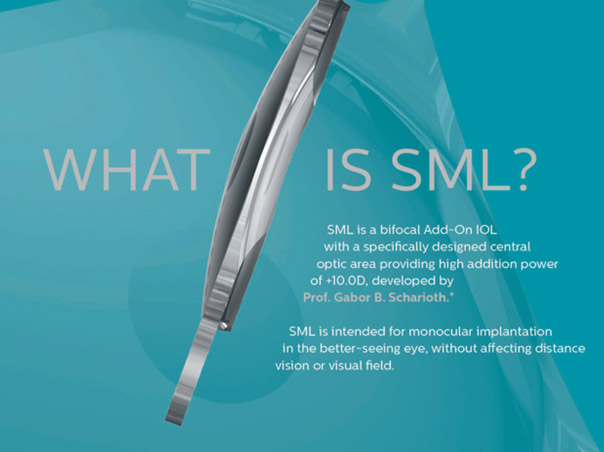
Scharioth macula lens (SML) is telescopic intraocular lens which is surgically implanted into the eye and gives magnification of letters and details allowing free movements. It gives greater comfort in comparison to external telescopic systems in glasses. It is implanted in the better eye, as add-on IOL.
Completely new technology in designing optical zones enables additional strength of
+10 D, with no effect to distance vision or width of visual field (invention of Prof Gabor B. Scharioth).
Magnifying glasses, telescopic systems and glasses are aid for magnifying letters while reading in cases of macular degeneration, yet at the same time they are limiting free functioning and movements. Because of that modern ophthalmology answered to needs of these people with new surgical possibilities.
Who are candidates for SML
– wet form of AMD, in terminal stage (scar stage) without exudation, when possibilities of aVEGF treatment are exausted
– myopic maculopathy
– congenital retinal diseases
– after macular surgery
– after vitrectomy with membrane peeling from macula or macular rupture surgery(macular hole)
It is applied in patients after cataract surgery (pseudophakia) with advanced AMD, gives possibility of simple and safe solution for near vision recover, damaged because of macular degeneration.
It can be applied simultaneously with cataract surgery, during the same procedure, but it is recommended to undergo phacoemulsification first than to evaluate whether the patient is a candidate for SML.
Why is SML advantageous in comparison with LVA (Low Vision Aid) system
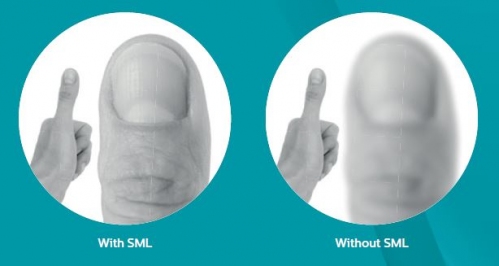
–gives sufficient magnification of image -2,5 times, without magnifying central defects in macula
– vision at distance remains undisturbed
– no reduction in visual field
– pricewise more affordable than earlier generations of implantable telescopes
– available since 2010.
– reversible, possibility of easy explantation
– revolutionary, new technology with proved add-on platform for specially designed central optical zone offers great refractive power of +10 D
As a difference to external aids Macula Lens magnifies the images, but not scotomas in central vision and creates lesser refractive error and better vision quality.
Constant presence in the eye, makes patient adapt better to high magnification. With training, they significantly improve reading speed at high magnification.
Decision about implantation follows examination that evaluates visual acuity at distance and near.
– patient must have visual acuity for distance, no lesser than 0.05
– near vision, with glasses correction of +2.5 D at 40 cm, and +6 D, at 15 cm respectively.
With all these low vision aids this test is used (patient has to understand the principle of reduced distance for reading, with increasing, magnifying) and if with added correction feels comfortable in reading then is a candidate for SML.
Patient must be motivated, to improve vision at distance and reading.
Surgery lasts shortly, 10 min.
It is under local anaesthesia, without pain
Incision is small 2,2 mm
Without staying in the hospital-outpatient.
Surgical procedures perform Prof. dr Pavel Rozsival, who was actively involved in developing studies of implantable telescopes.
He is dedicated to anterior segment surgery, cataract surgery, refractive surgical procedures, with application of various, by need chosen, intraocular implants.
He is one of leading members of international society for intraocular implants, scolar and educator by profession at world ophthalmological meetings, on subjects of implantible intraocular miniature telescopes. Also, impressive number of performed SML implants, Prof. dr Arpad Bereczki, vitreoretinal surgeon, dedicated to macular problems, macular and refractive surgery.